
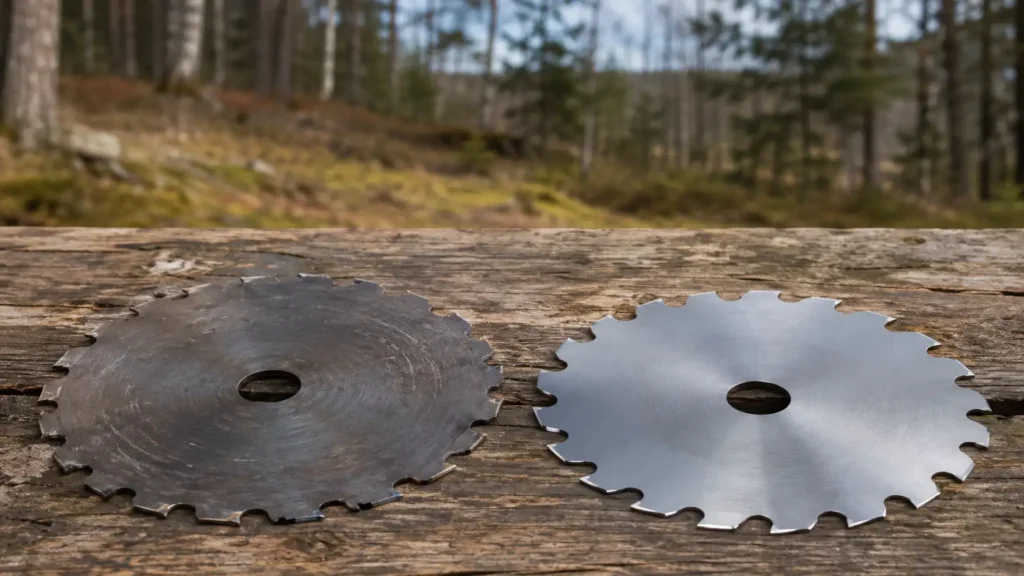
A brushcutter blade is subjected to considerable stress. Brushwood, stems, grass and other vegetation gradually wear down the blade’s teeth, while contact with stones, soil or other hard materials can accelerate wear even further.
Many blades can be sharpened or ground several times and regain much of their cutting performance. However, sooner or later, a point is reached where maintenance is no longer sufficient and the blade needs to be replaced.
Recognising the signs of a worn or damaged brushcutter blade is important both for the quality of the work and to ensure that the brushcutter operates as intended. Here, we go through seven common signs that it may be time to replace the blade.
Important: A brushcutter blade with cracks, severe deformation or other obvious damage should not continue to be used. Always follow the instructions provided by both the brushcutter and blade manufacturers.
How Long Does a Brushcutter Blade Last?
There is no simple answer to how long a brushcutter blade will last. Its service life is affected by factors such as:
- the type of vegetation being cleared
- how often the blade is used
- the type of blade and the material it is made from
- how regularly the blade is sharpened or ground
- how close to the ground you work
- how often the blade comes into contact with stones and other hard objects
- how the blade is cleaned and stored between uses
A blade used for several hours a day in demanding terrain will naturally be subjected to significantly more wear than a blade used only a few times a year.
Therefore, the blade’s condition and performance are more important than its age.
1. The Blade Cuts Noticeably Less Effectively
One of the first signs of wear is that the brushcutter blade no longer cuts through vegetation as easily as it used to.
For example, you may notice that:
- cutting takes longer
- you need to apply more pressure against the material
- the blade does not bite immediately when it meets the stem
- the work feels more demanding than before
- the cutting result becomes less even
Reduced cutting performance does not automatically mean that the blade needs to be replaced. Often, sharpening or grinding is sufficient.
However, if the blade continues to perform poorly even after proper maintenance, this is a clearer sign that the wear has progressed to the point where replacement may be necessary.
2. The Teeth Are Severely Worn
The teeth of a brushcutter blade gradually wear down each time the blade is used. Regular filing or grinding restores the cutting edge, but also removes a small amount of material in the process.
After repeated sharpening, the tooth’s original shape and dimensions will therefore gradually change.
Inspect the blade regularly and look for teeth that are:
- unusually short
- severely rounded
- unevenly worn
- damaged after contact with hard objects
- noticeably different from the other teeth
When the teeth have become so worn that the correct tooth geometry can no longer be restored through normal filing or grinding, it may be time to replace the blade.
3. The Blade Has Cracks
Cracks are a much more serious sign than normal wear.
A brushcutter blade operates at high rotational speeds and is subjected to considerable forces. Therefore, any visible cracks should always be taken seriously.
Pay particular attention to areas:
- around the blade’s centre hole
- between or behind the teeth
- around areas of previous damage
- along the outer edge of the blade body
If you discover a crack, stop using the blade and follow the manufacturer’s instructions for inspection and replacement.
Do not attempt to fix structural damage simply by filing or grinding the blade. Sharpening restores a cutting edge – it does not repair the blade body itself.
4. The Blade Is Bent or Deformed
A brushcutter blade should be straight and rotate smoothly. Heavy contact with stones, stumps or other solid objects can, in some cases, cause the blade to become deformed.
A common sign is that the blade appears to move from side to side as it rotates.
Other possible signs include:
- unusual vibrations
- uneven cutting results
- the blade feels unstable
- visible bending when the blade is inspected from the side
If the blade is visibly deformed, it should not continue to be used without inspection. A severely bent blade is not something that should be compensated for by sharpening the teeth.
5. Teeth Are Damaged or Missing
Individual teeth can be damaged if the blade strikes stones, metal, fencing or other hard objects.
Minor wear can sometimes be corrected through proper filing or grinding. However, more extensive damage can affect how the blade performs.
Pay particular attention to whether:
- a tooth has broken off
- several teeth are damaged
- large parts of a tooth are missing
- a tooth differs significantly from the others
- a carbide tip has come loose or been damaged
A blade is designed to operate with a specific tooth geometry and balance. If the damage is extensive, the blade should be assessed in accordance with the manufacturer’s instructions and replaced if necessary.
6. Vibrations Have Increased
Changes in vibration can be a sign that something is not right.
The blade is not always the cause. The mounting, angle gear and other parts of the brushcutter can also cause vibrations. However, if the problem occurs suddenly after the blade has struck something, the blade should be inspected carefully.
Increased vibrations can be caused by factors such as:
- unevenly worn teeth
- incorrect sharpening
- deformation
- damaged or missing teeth
- problems with the blade mounting
Switch off the machine and investigate the cause before continuing work. If the blade is damaged, it should not continue to be used simply because the brushcutter can still be operated.
7. Sharpening or Grinding No Longer Helps
One of the clearest signs is when the blade has been properly maintained but still does not regain its previous cutting performance.
A brushcutter blade can usually be sharpened several times during its service life, but not indefinitely.
After prolonged use, the teeth may have changed so much that further sharpening no longer produces the desired result. You may then notice that the blade becomes sharper immediately after sharpening but quickly loses its cutting performance again.
At that point, it may be more efficient to replace the blade than to spend additional time on maintenance.
If it is time for a new blade, you can compare Strand’s different brushcutter blades and choose a model based on the type of vegetation and environment in which you work.
When Is Sharpening Enough and When Should the Blade Be Replaced?
It is important to distinguish between normal wear of the cutting edge and damage to the blade itself.
If the blade is still intact and straight but has gradually become dull, filing or grinding can often restore its cutting performance.
Filing or grinding may be sufficient when:
- the cutting edge has become dull
- the teeth show normal and even wear
- the blade is still straight
- there are no cracks or major damage
- the tooth geometry can still be restored
Replacement may be necessary when:
- the blade has cracks
- the blade body is severely deformed
- teeth or cutting tips are seriously damaged
- the blade can no longer be restored through proper maintenance
- wear has significantly altered the shape of the teeth
Different types of brushcutter blades also have different maintenance requirements. A standard steel blade, for example, may require a different sharpening method than a carbide-tipped blade. Therefore, always check the specific requirements for the model you are using.
How to Inspect Your Brushcutter Blade Before Use
A quick inspection before you start clearing can help you identify problems early.
Start by making sure the machine is switched off in accordance with the manufacturer’s safety instructions. Then visually inspect the blade.
Look for:
- cracks or damage to the blade body
- bends or deformation
- broken or abnormally worn teeth
- uneven tooth geometry
- damage around the centre hole
- other changes since the previous use
Also check that the blade is correctly installed according to the brushcutter manufacturer’s instructions before using the machine.
It only takes a moment, but it is a good routine, especially after the blade has come into contact with a stone or another hard object.
How to Reduce Wear on Your Brushcutter Blade
Although all blades eventually wear out, you can influence how quickly this happens.
Avoid Cutting into the Ground
Soil and sand contain hard particles that can quickly dull the cutting edge. Therefore, try to keep the blade above ground level while clearing.
Take Extra Care in Rocky Terrain
Familiarise yourself with the area before you start working. Stones can be difficult to see in tall grass and dense vegetation.
Maintain the Blade Regularly
It is often better to carry out minor maintenance regularly than to continue working with a very dull blade.
Use the Right Blade for the Job
Grass, brushwood, thicker stems and clearing near stones place different demands on the blade. By choosing the right type of brushcutter blade for the environment, you can make both the work and blade wear easier to manage.
Clean the Blade After Use
Resin, plant debris and dirt can make it more difficult to assess the condition of the blade. A clean blade is also much easier to inspect before the next work session.
Don’t Replace the Blade Based Solely on a Set Number of Operating Hours
It may be tempting to set an exact replacement interval for the blade, but operating time does not tell the whole story.
Two identical blades can be in completely different condition after the same number of operating hours, depending on how and where they have been used.
A better routine is therefore:
Inspect → maintain → evaluate → replace if necessary.
A well-maintained blade used under favourable conditions can continue to perform well for a long time, while a blade that has been subjected to a severe impact may need to be taken out of service much sooner.
Summary: 7 Signs That Your Brushcutter Blade Should Be Inspected
Look out for the following signs:
- the blade cuts significantly less effectively
- the teeth are severely worn
- you discover cracks
- the blade is bent or deformed
- teeth or cutting tips are damaged
- the brushcutter vibrates more than usual
- filing or grinding no longer restores the blade’s cutting performance
Normal wear can often be managed through regular maintenance, but structural damage should be taken more seriously.
By inspecting your brushcutter blade regularly and replacing it when it is no longer in good condition, you can achieve more efficient, consistent and controlled clearing.

 English
  Svenska